Project overview
MKE Meetups
A weekly event list written like a note from a neighbor.
Why a list wasn’t enough
It’s not difficult to find a list of stuff to do in Milwaukee. Anyone can scrape events from around the web and an algorithm can rank the results and display them on a website, easy peasy. What none of those other offerings solve is the hard problem of getting strangers to show up to something (in real life!) for the first time, and then giving them reason to keep coming back, week after week.
MKE Meetups is hand-picked by someone who lives here, and if you reply to the email, that same person writes back. That changes how the whole thing feels: readers are being invited to come out, try something new, and meet people, rather than being handed another pile of event data to sort through.
It started as a newsletter
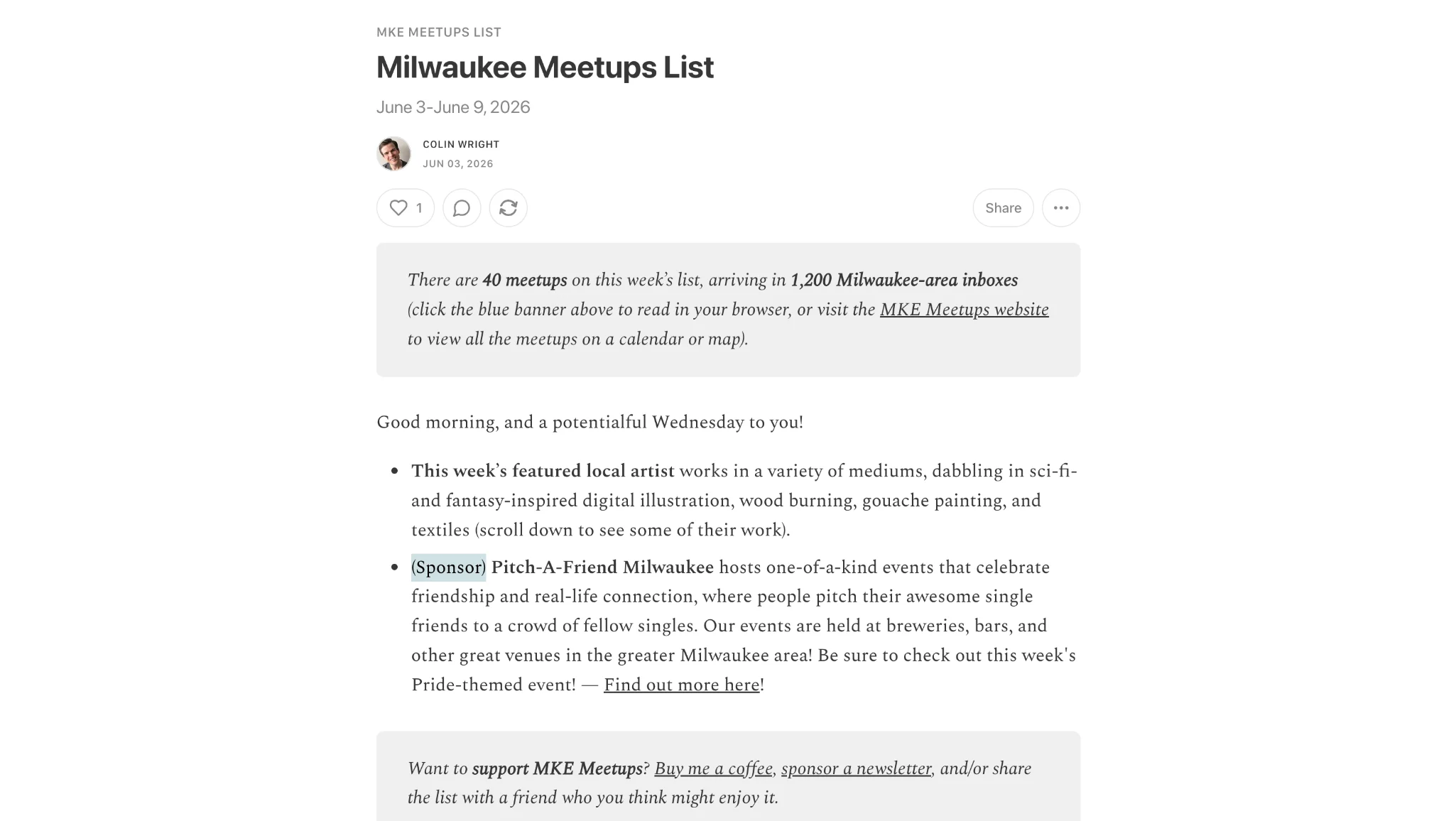
I moved to Milwaukee’s Riverwest neighborhood in 2021, after years as a full-time traveler, and didn’t know many people here. So after starting (and loving) a weekly reading group, I started building the list I wished someone would have handed me when I arrived. The resulting Substack newsletter led to a website, and now MKE Meetups lands in more than 1,400 subscribers’ inboxes every Wednesday morning, and even more browsers every day. It features local artists, shares sponsored messages, and serves as a matchmaker between meetup hosts and local businesses.
Why the voice matters
The personality gives people a reason to open the next Wednesday’s email. A few recurring bits of language make a practical list feel familiar, and familiarity is useful when the reader is deciding whether to walk into a room full of strangers.
The voice
MKE Meetups is the friend who waves you over to their lunch table. It’s warm, a little goofy, and glad you showed up. The attention stays on the hosts, artists, sponsors, and events. Subscriber replies get personal answers. The silliness works because there’s a real person behind it, putting the list together every week.
Three rules behind the voice
These principles inform every greeting, listing, reply, and sign-off.
1
Welcoming
Write like you’re pulling out a chair. Everyone gets a seat, everyone comes as they are, and there’s no wrong way to show up, including sitting one out. Address the reader with a smile, and mean it.
- Use
- First-person “I,” direct “you,” “beginners welcome”
- Avoid
- Gatekeeping, in-crowd jargon, members-only energy
2
Generous
Point the spotlight outward. The makers, hosts, and neighbors are the stars; the list is just the introduction and a place to gather and enthuse. Quote hosts in their own words, credit loudly, and get excited for what others are doing.
- Use
- Names, credit, hosts’ own words
- Avoid
- Centering the brand, taking the credit
3
Playful
Be confident enough to be silly and guileless. Say things like, “a tail-wagging Wednesday to you and yours,” use a sincere “:)”. A little off-beat absurdity shows that a human made this. But keep it casual and don’t go full-clown.
- Use
- Specific, oddball, handmade phrasing
- Avoid
- Hype or emoji standing in for warmth
Where the voice sits
The newsletter, website, and replies all need to sound like the same neighbor. If one of them slips into generic marketing language, the relationship becomes harder to believe.
This, but not that
This kind of voice takes some care, because warmth and earnestness can curdle into something else pretty quickly if they’re pushed too far.
- Warm, but never saccharine.
- Playful, but never pointless.
- Enthusiastic, but never a hard sell.
- Welcoming, but never pushy.
The weekly rituals
Three recurring parts of the newsletter do most of the work of making it feel familiar each week.
1. The greeting and the sign-off
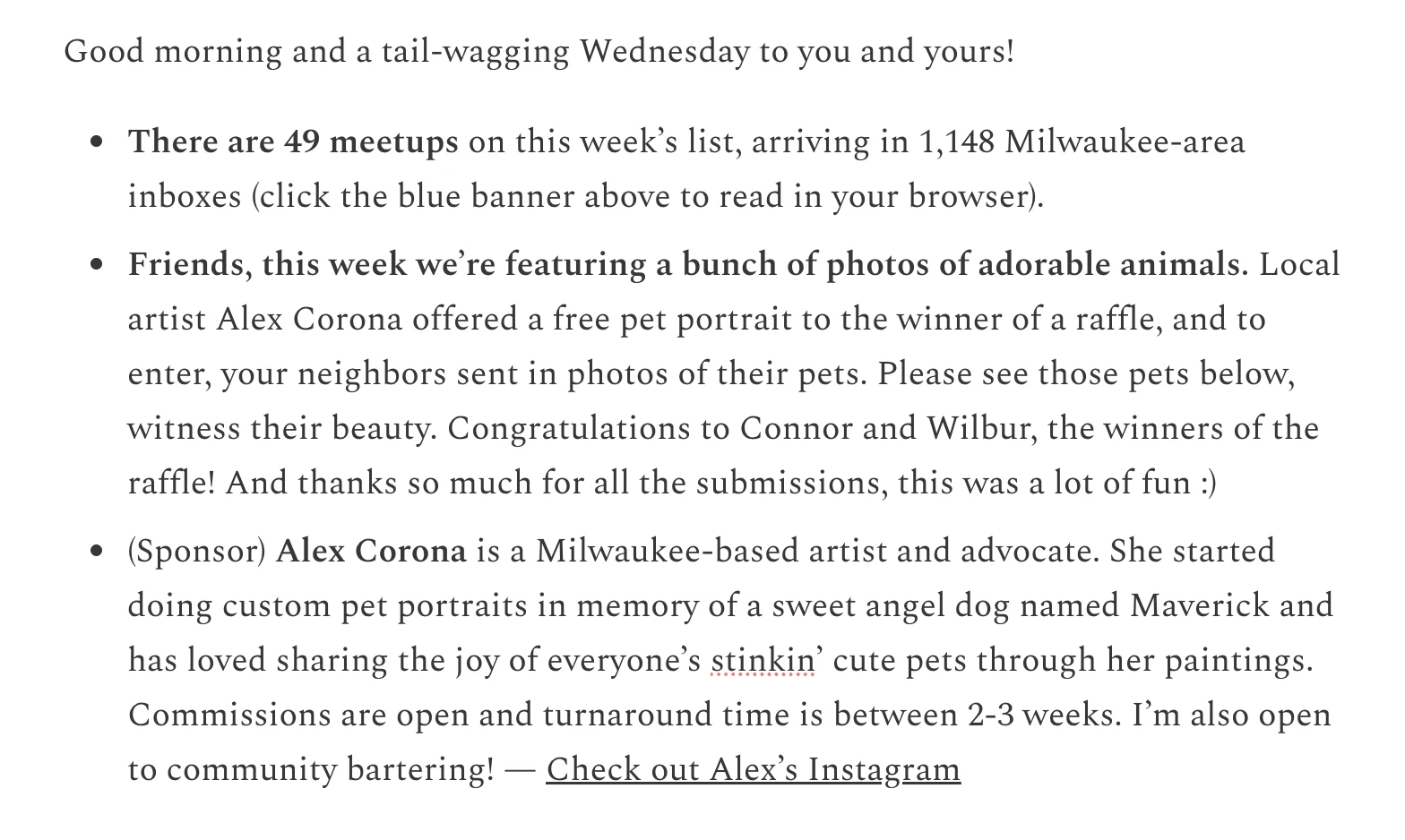
Every issue opens with an oddly specific, slightly absurd salutation: “a heightened but practicable Wednesday to you,” “a demure but confident Wednesday,” “a preposterous, whimsical Wednesday,” “a tail-wagging Wednesday to you and yours.” It’s never the same twice, and while sometimes it references the contents of that week’s newsletter, often it’s random (but personal-feeling) whimsy. This greeting is one of many human fingerprints intentionally left on each issue.
The same voice bookends the email. Scroll past every listing and the last thing you read will be a small, sincere bit of encouragement: “It’s going to be a great week, you’ve got this!” Few readers make it all the way to the bottom of a newsletter, but those who do are rewarded with a simple, heartfelt goodbye.
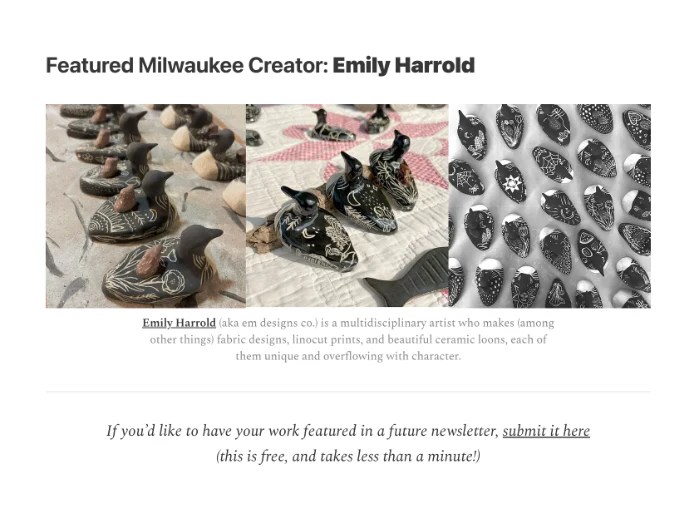
2. A local artist in every issue
Each week’s newsletter features a Milwaukee-area artist and puts their work in front of the list. The artist also gets top billing when the issue is promoted. It’s a simple, practical way to share the newsletter’s audience with people who are making things nearby.
3. Sponsors who sound like neighbors
Paid sponsors are local organizations promoting something local: a grand opening, a Milwaukee-made product, or a business with space for meetups. The messages often include a raffle, giveaway, or reader deal. They read as useful recommendations because they’re selected and written for the same people as the rest of the email.
And the list still has to work
Underneath all that personality is real information architecture. Roughly 40–60 meetups, from pre-dawn workouts, to board game nights, to silent book clubs are collected, parsed, styled, and shared.
Information about recurring meetups (think knitting groups and book clubs, not classes or concerts) is often scattered between far-flung Facebook groups, dusty Meetup.com pages, and letter-sized signs affixed to bulletin boards across the city. That elusiveness makes it difficult for people to find these types of small communities and, as a consequence, find their people.
A predictable list structure (and a predictable publishing cadence for the email) is what allows the brand’s voice to work without muddling or overshadowing the information that’s being offered.
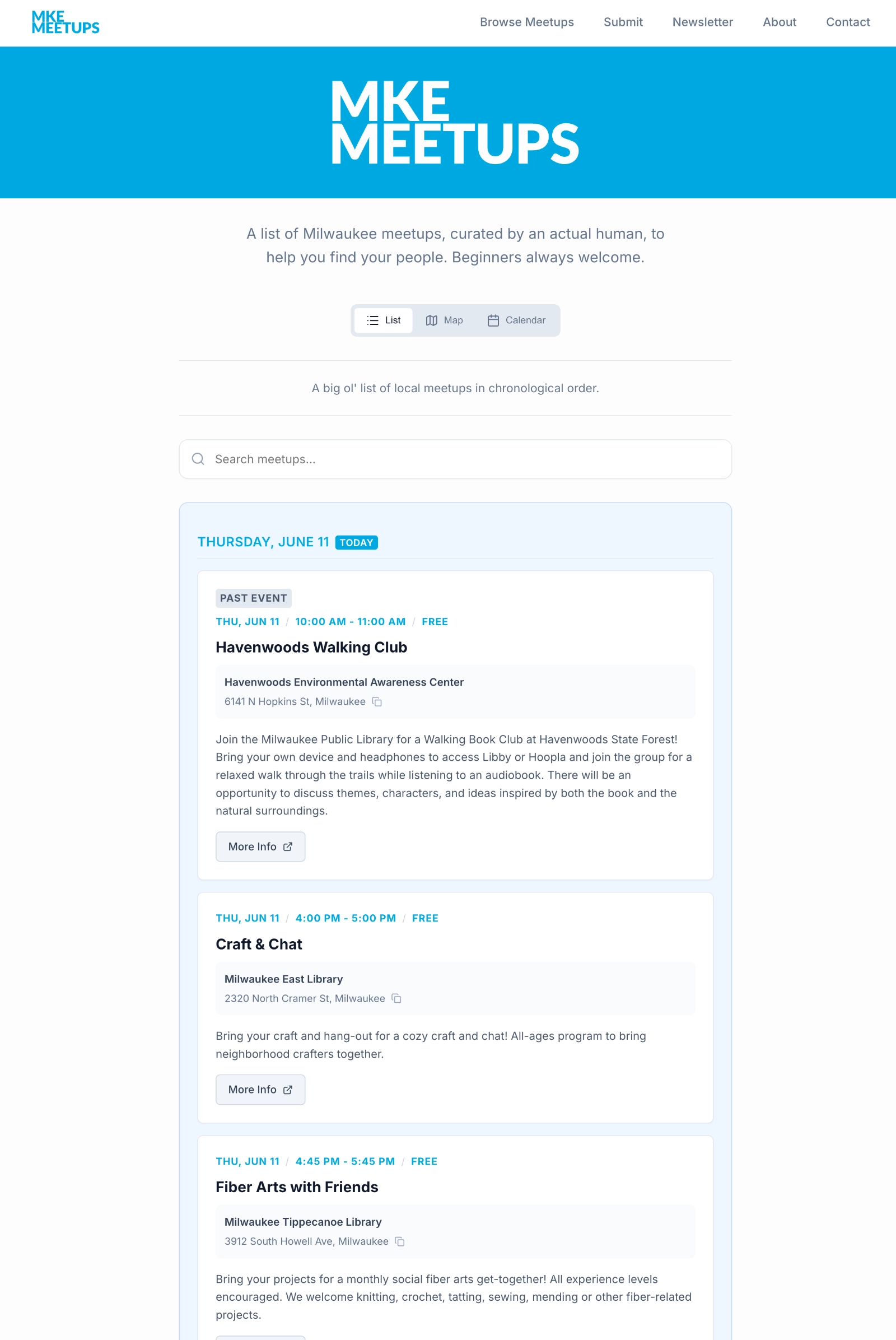
Meetups always appear in chronological order with the event name, time, venue, a blurb in the host’s own words, and a link to more information. Readers know where to look, and the personality never has to compete with the practical details.
Rules for recurring sections
The components here are the sections readers see every week, plus the replies and pages around the email. Each has a short rule so a sponsor message or sign-off does not suddenly sound like it came from somewhere else.
| Surface | MKE Meetups writes | Not |
|---|---|---|
| In the newsletter | ||
| Context section | A conversational, informational brief A scannable but cordial sentence showing the number of meetups and subscribers, and telling users how to view the newsletter in a browser and where to find the MKE Meetups website. | A bland list of numbers and links. |
| Intro notes | A collection of short, topical, bulleted items Project updates, local happenings, and a teaser for the week’s featured local artist. | Here’s this week’s list of events. |
| Sponsor slot | A message from your neighbor Sponsors share a brief message (with a single link) that feels like it’s coming from a neighbor rather than a corporation. | A generic, non-local advertisement. |
| Ask and invite | How to support and reply A non-pushy sentence about newsletter support options, and a friendly invitation to reply with questions or feedback (including a note saying that every email will receive a response). | Become a paying member to see the full list of this week’s meetups. |
| Meetup listings | Name, time, venue, and the host’s own words Quote the host directly and include first-timer cues (“mention you’re here for the meetup”). Paraphrase only when truncating information that’s included elsewhere in the listing. Always link to more information provided by the host. | The host’s voice rewritten as the brand’s. |
| Footer | Inspirational send-off A one-line, upbeat, encouraging goodbye hidden at the end of the newsletter, ending it on a positive note. | Say nothing at all (like a sociopath). |
| Beyond the newsletter | ||
| Email reply | Human-to-human, signed with a real name A reply to every email, written from one neighbor to another. Be context-aware, but lean toward enthused, welcoming, and encouraging. | Autoresponders, “Your inquiry (#4471) has been received.” |
| Social media | Even the off-list surfaces point outward The Instagram profile exists mostly to share other people’s stuff, not to self-promote. | Spammy self-promotion; “follow us for more!” |
Voice in practice: the weekly greeting
Rejected
“Hello! Here’s this week’s list of Milwaukee meetups. 🎉”
Chosen
“Good morning, and a preposterous, whimsical Wednesday to you!”
Why: The rejected line could belong to any newsletter. The chosen phrase is specific, slightly ridiculous, and plainly selected by a person. It tells the reader what sort of email they have opened before they reach the first listing.
Voice in practice: the sign-off
Rejected
“That’s all for this week, see you next Wednesday.”
Chosen
“It’s going to be a great week, you’ve got this :)”
Why: The rejected line just announces that the email is over, while the chosen one actually says goodbye to the reader. It doesn’t have an informational job to do, but it’s how a neighbor might end a note.
One voice across all surfaces
The newsletter, website, social posts, and email replies use the same tone. Someone who follows a forwarded issue to the site, or replies with a question, should not feel as if they have been handed to another brand.
What happened after launch
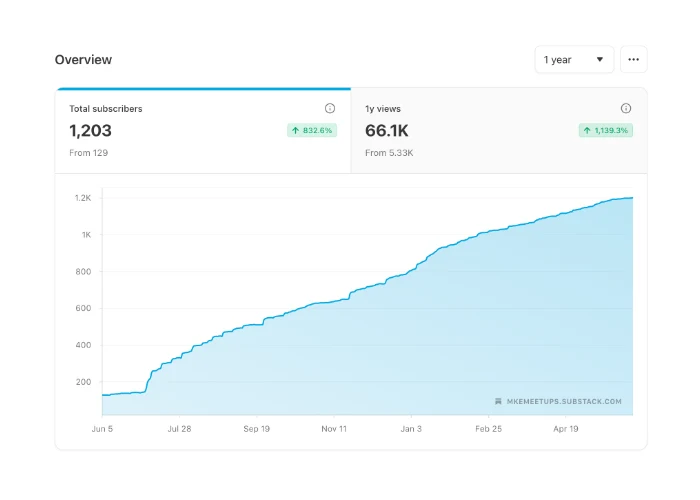
In its first year, the list grew to 1,200+ subscribers from a standing start, entirely organically, while the newsletter archive drew 66,000+ views. It now serves more than 1,400 subscribers without paid acquisition, with average open rates around 55% and click rates around 11%. The website draws approximately 1,500 visitors each month.
Curating 40–60 hand-checked meetups every week adds up to approximately 2,000–3,000 listings a year, pulled from more than 100 sources I keep an eye on, plus dozens of event submissions each month.
Some of the most encouraging results don’t show up in a dashboard, though. Hosts have written to say that new members found them through the list. Featured artists and sponsors have reported commissions, sales, and other opportunities after an issue went out. And readers keep showing up to things, which is what the project was built to encourage in the first place.
Zoom in: the newsletter
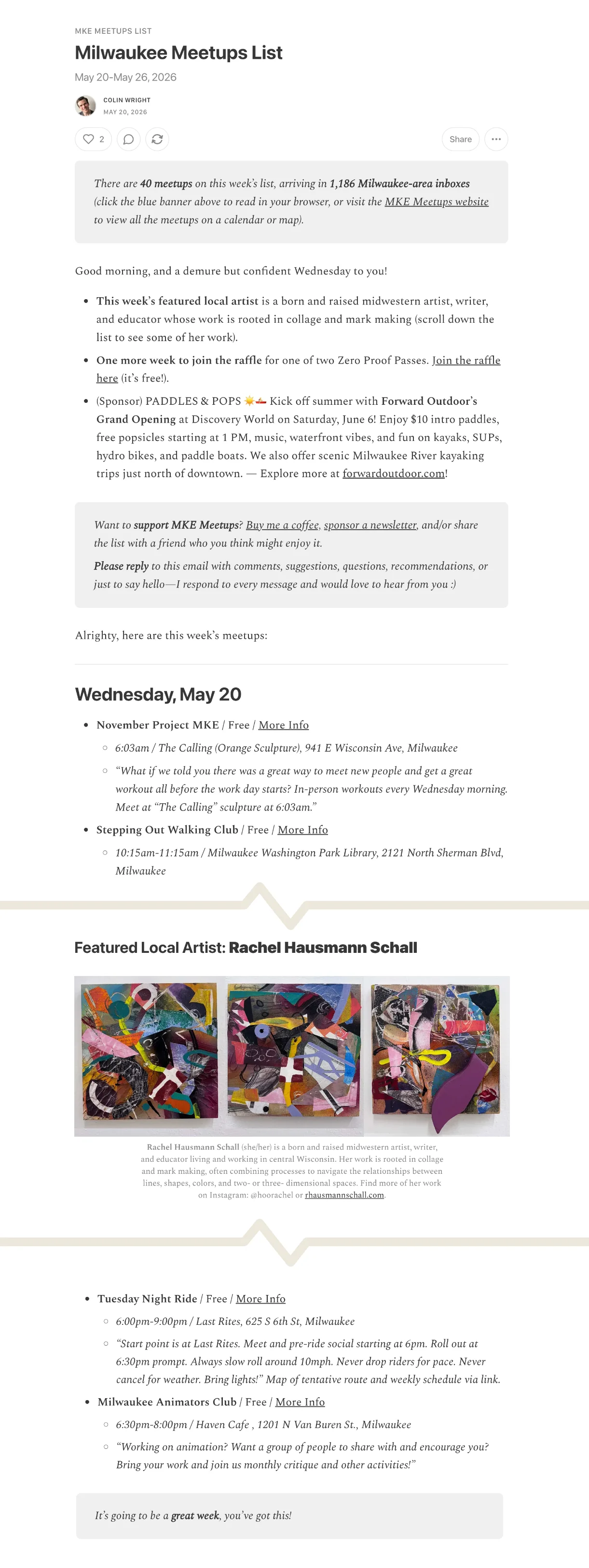
Almost every element mentioned above lives in the same place: the MKE Meetups Wednesday morning email.
The walk-through
The masthead. Before a single event is mentioned, the reader meets the curator and is handed information about the newsletter and how to use it.
Greeting and notes. A one-of-a-kind greeting, followed by a nod to the season, a heads-up about a can’t-miss event, or some kind of giveaway. This bulleted list also includes a teaser about the week’s featured local artist, and the sponsor message is always the last item.
The list itself. 40–60 meetups in a predictable, scannable structure, so a reader can quickly assess their options and make plans accordingly.
The featured artist. A local artist’s work is woven into the layout, mid-issue, providing a nice, visual break in the meetup list, while also sharing something about the artist’s inspiration or process, and a link to their portfolio.
The sign-off. After the list comes the bookend: “It’s going to be a great week, you’ve got this :)”. It ends things on an upbeat note, focused on the reader rather than the newsletter.
Why people keep opening it
Most of the information in the list is available elsewhere, if you know where to look (and have the time to look). What people seem to come back for is the selection, the dependable Wednesday schedule, and the sense that somebody nearby put the list together and hopes they find something good in it.